What Are Tray Forming Machines and How Do They Work?
Tray forming machines are packaging systems designed to transform flat sheets, blanks, or pre-cut packaging materials into three-dimensional trays.
These machines automate operations such as material feeding, folding, forming, pressing, and tray discharge.
Depending on the application, tray forming machines can process corrugated board, paperboard, cardboard, molded fiber, and other suitable packaging materials. They are used in food and beverage packaging, consumer goods, logistics, retail packaging, and industrial applications.
The machine configuration depends on tray dimensions, material characteristics, production volume, tray design, and the required level of automation.
Why Tray Forming Machines Matter
Trays provide a structured platform for holding, displaying, transporting, or grouping products. Producing them consistently requires accurate folding, positioning, and forming.
Automated tray forming equipment helps maintain repeatable dimensions and production cycles. It can also be integrated with upstream product-feeding equipment and downstream packing, sealing, labeling, or palletizing systems.
Important considerations include:
- Tray dimensions
- Material type
- Board thickness
- Tray design
- Production volume
- Folding pattern
- Forming method
- Product characteristics
- Automation requirements
- Available production space
How Tray Forming Machines Work
Although machine configurations vary, most tray forming systems follow a series of controlled stages.
1. Material Feeding
The process begins with flat tray blanks or sheets stored in a magazine or feeding system.
The machine separates individual blanks and transfers them into the forming area. Sensors can monitor blank position and detect feeding issues.
Depending on the machine design, blanks may already contain cut lines, crease lines, slots, and other features required for forming.
2. Blank Positioning
After feeding, the blank is positioned accurately before the forming operation begins.
Guides, belts, vacuum systems, or mechanical positioning devices can keep the blank aligned.
Accurate positioning is important because even small deviations can affect the final tray geometry.
3. Folding
The machine folds predetermined sections of the blank along crease lines.
Folding mechanisms can include:
- Folding rails
- Folding belts
- Mechanical guides
- Folding arms
- Servo-driven mechanisms
- Pneumatic actuators
The exact arrangement depends on the tray design.
4. Tray Forming
After the sides and flaps are folded, the machine forms the blank into its final three-dimensional configuration.
Forming tools or compression plates may apply controlled pressure to create the required tray shape.
For certain tray designs, the forming operation can include locking tabs, adhesive application, or other methods to maintain the tray structure.
5. Compression and Stabilization
Some tray forming machines use a compression stage after folding.
Controlled pressure holds the tray in position while adhesive sets or while folded sections settle into their final geometry.
This stage can help maintain consistent dimensions and structural rigidity.
6. Inspection
Sensors or vision systems can inspect formed trays for incorrect folds, missing components, dimensional variations, or other visible defects.
Automated inspection can be integrated into the production line to identify problems before trays reach downstream packaging operations.
7. Tray Discharge
Once formed and stabilized, the completed tray moves onto a conveyor or directly into the next packaging process.
Depending on the production line, trays may then receive products automatically through filling, loading, or case-packing equipment.
Types of Tray Forming Machines
Cardboard Tray Forming Machines
These machines form trays from paperboard or cardboard blanks. They can be configured for different dimensions and folding patterns.
They are used in various consumer and retail packaging applications.
Corrugated Tray Forming Machines
Corrugated tray forming equipment processes corrugated board to create stronger trays suitable for heavier products.
Common applications include food products, beverages, consumer goods, and logistics packaging.
Automatic Tray Forming Machines
Automatic systems perform blank feeding, forming, folding, and discharge with limited manual intervention.
They are commonly integrated into production lines where consistent tray output is required.
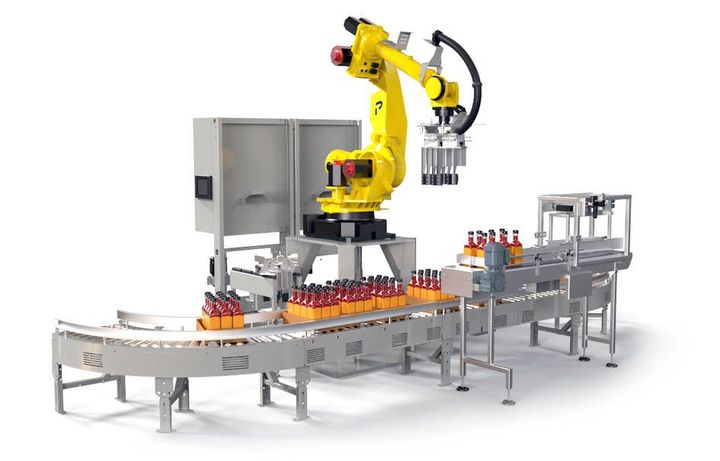
Robotic Tray Forming Systems
Robotic systems can combine tray forming with product handling or other packaging operations.
Robotic equipment can provide flexibility when packaging formats or product arrangements change between production runs.
Paper Tray Forming Machines
Paperboard and paper-based tray systems can be designed for lightweight packaging applications.
Depending on the material and design, machines may use folding, pressing, forming, or adhesive-based techniques.
Molded Fiber Tray Forming Equipment
Molded fiber trays use fiber-based material that has been formed into a predetermined shape. Specialized equipment can press or mold the material into the required tray geometry.
These systems differ from conventional flat-blank folding machines because the tray shape is created through a molding process.
Comparison of Tray Forming Machines
| Machine Type | Main Material | Typical Characteristic |
|---|---|---|
| Cardboard tray former | Cardboard | Flexible tray formats |
| Corrugated tray former | Corrugated board | Higher structural strength |
| Automatic tray former | Various boards | Automated production |
| Robotic system | Various materials | Flexible handling |
| Paper tray former | Paperboard | Lightweight packaging |
| Molded fiber system | Fiber material | Molded tray geometry |
Main Components of Tray Forming Machines
A complete tray forming system can include several components.
| Component | Function |
|---|---|
| Blank magazine | Stores flat tray blanks |
| Feeding system | Separates and transfers blanks |
| Positioning guides | Align blanks |
| Folding mechanism | Folds tray panels |
| Forming tools | Creates final tray geometry |
| Compression unit | Stabilizes formed sections |
| Adhesive system | Applies adhesive when required |
| Sensors | Monitor material and position |
| Vision system | Inspects finished trays |
| Discharge conveyor | Transfers completed trays |
| Control system | Coordinates machine operations |
Factors for Selecting Tray Forming Machines
Tray Design
Evaluate tray length, width, depth, wall structure, folding pattern, locking features, and required geometry.
Material
Determine whether the machine will process cardboard, corrugated board, paperboard, molded fiber, or another packaging material.
Material Thickness
Board thickness affects folding force, forming characteristics, and machine configuration.
Production Volume
Higher production volumes may require automatic feeding, continuous forming, servo-driven mechanisms, and integrated product handling.
Product Characteristics
Consider the weight, dimensions, shape, and sensitivity of the products that will be placed into the finished trays.
Automation
Determine whether the line requires automatic blank feeding, adhesive application, inspection, tray stacking, and integration with filling or case-packing equipment.
Applications of Tray Forming Machines
Tray forming equipment is used across a wide range of packaging applications.
Common industries include:
- Food packaging
- Beverage packaging
- Bakery products
- Fresh produce
- Consumer goods
- Electronics
- Pharmaceutical packaging
- Personal-care products
- Retail packaging
- Industrial components
Frequently Asked Questions
What are tray forming machines?
Tray forming machines are automated packaging systems that convert flat blanks, sheets, or packaging materials into three-dimensional trays through folding, forming, pressing, or molding.
How does a tray forming machine work?
A typical machine feeds a flat blank, positions it, folds predetermined sections, forms the tray, applies compression or adhesive when required, inspects the result, and transfers the finished tray to the next stage.
What materials can tray forming machines process?
Depending on the machine design, materials can include cardboard, paperboard, corrugated board, paper-based materials, and molded fiber.
What is the difference between a tray former and a case former?
A tray former creates an open-top tray designed to hold or display products, while a case former generally creates a more enclosed carton or case for product packaging and transportation.
What factors affect tray forming machine selection?
Tray dimensions, material type, board thickness, folding design, production volume, product characteristics, automation requirements, and downstream packaging integration all affect equipment selection.
Conclusion
Tray forming machines automate the conversion of flat packaging materials into structured trays through feeding, positioning, folding, forming, compression, inspection, and discharge.
Different systems are designed for cardboard, corrugated board, paperboard, molded fiber, and specialized tray formats. Selecting the appropriate equipment requires careful consideration of tray design, material characteristics, production volume, product requirements, and automation needs.
Understanding the complete forming process provides a practical foundation for evaluating tray forming equipment and integrating it into a broader packaging line.