What Are Industrial Washing Systems and How Do They Work?
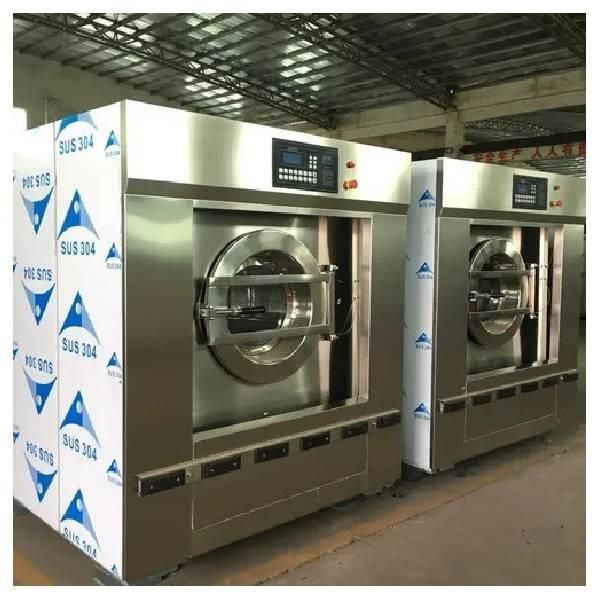
Industrial washing systems are automated or semi-automated cleaning machines designed to remove dirt, oils, grease, particles, residues, and other contaminants from industrial parts, components, containers, products, or equipment.
They are used across manufacturing, food processing, automotive, pharmaceutical, electronics, metalworking, and other industrial environments.
Depending on the application, an industrial washing system may use spray jets, immersion, rotating brushes, ultrasonic energy, pressure, detergents, heat, or combinations of these methods. The system is selected according to the type of contamination, component geometry, material, production volume, and required cleanliness level.
Why Industrial Washing Systems Matter
Manufacturing processes can leave unwanted materials on components and products. Machining may produce chips and cutting fluids, while forming, handling, and processing can introduce dust, oils, grease, or other residues.
Industrial washing systems can provide:
- Consistent cleaning
- Automated parts handling
- Controlled washing conditions
- Reduced manual cleaning
- Repeatable production cycles
- Controlled detergent and water use
- Integration with production lines
- Automated rinsing and drying
The cleaning method should match the contamination and the material being cleaned. A process designed for heavy grease removal may be inappropriate for delicate electronic or food-contact components.
How Industrial Washing Systems Work
Although equipment configurations vary, most industrial washing systems follow a sequence of controlled cleaning stages.
1. Loading
Parts, components, containers, or products are introduced into the washing system.
Loading can be manual or automated. Conveyors, baskets, racks, fixtures, and robotic handling systems may be used depending on the production process.
Correct positioning is important because blocked surfaces or overlapping parts can prevent the cleaning medium from reaching contaminated areas.
2. Pre-Cleaning
Some systems begin with a pre-wash stage to remove loose particles, heavy contamination, or excess material.
This stage may use water, air, brushes, or lower-pressure spray depending on the application.
3. Washing
The primary washing stage removes the main contamination from the product or component.
Common cleaning mechanisms include:
- High-pressure spray
- Low-pressure spray
- Immersion
- Agitation
- Rotary spray
- Brushing
- Ultrasonic cleaning
Cleaning solutions may contain water, detergents, alkaline formulations, or other application-specific chemicals.
4. Mechanical Action
Mechanical action improves the ability of the cleaning medium to remove contamination.
Spray pressure, nozzle arrangement, rotation, brushing, agitation, or ultrasonic energy can help dislodge oils, particles, and residues.
The appropriate mechanical action depends on the component geometry and contamination type.
5. Rinsing
After washing, parts may undergo one or more rinsing stages.
Rinsing removes remaining detergent and loosened contamination from the component surface.
The quality and temperature of the rinse medium can be controlled according to the required cleaning process.
6. Drying
Following rinsing, parts may be dried before entering the next production stage.
Common drying methods include:
- Hot-air drying
- Air knives
- Vacuum drying
- Centrifugal drying
- Heated-air circulation
The appropriate method depends on component geometry, material, and required dryness.
7. Inspection and Unloading
After cleaning and drying, parts can be inspected before being transferred to the next production stage.
Inspection may be manual or automated and can involve visual systems, dimensional checks, surface inspection, or other quality-control methods.
Main Types of Industrial Washing Systems
Spray Washing Systems
Spray washers use multiple nozzles to direct cleaning fluid onto parts.
The spray pattern, pressure, temperature, and nozzle configuration can be adjusted according to the component and contamination.
They are commonly used for:
- Machined components
- Metal parts
- Automotive components
- Industrial assemblies
- Food-processing equipment
Immersion Washing Systems
Immersion washers submerge parts in a cleaning solution.
Agitation can be used to increase cleaning effectiveness by moving the solution around the components.
Immersion systems can be useful for parts with complex shapes or contamination that requires extended contact with the cleaning solution.
Ultrasonic Washing Systems
Ultrasonic systems use high-frequency sound waves to create microscopic cavitation bubbles in a cleaning liquid.
The collapse of these bubbles generates localized cleaning action that can reach small cavities and complex surfaces.
Ultrasonic cleaning is commonly considered for precision components, instruments, electronics-related parts, and other applications requiring detailed cleaning.
Conveyor Washing Systems
Conveyor washing systems continuously move parts through multiple cleaning stages.
A typical sequence may include:
Loading → Pre-Wash → Main Wash → Rinse → Drying → Unloading
These systems are suitable for continuous production environments where large quantities of similar components need consistent cleaning.
Rotary Washing Systems
Rotary washers use rotating baskets, drums, or component fixtures to expose different surfaces to the cleaning medium.
Rotation can improve coverage and help provide more consistent washing for components with multiple surfaces.
Industrial Washing System Comparison
| System Type | Cleaning Method | Typical Applications |
|---|---|---|
| Spray washer | Pressurized spray | Metal and machined parts |
| Immersion washer | Cleaning bath | Complex or heavily contaminated parts |
| Ultrasonic washer | Cavitation | Precision components |
| Conveyor washer | Continuous staged washing | High-volume production |
| Rotary washer | Rotational exposure | Multi-surface components |
Factors That Affect Cleaning Performance
Contamination Type
The cleaning process must match the contaminant.
Oils, grease, metal chips, dust, food residues, and chemical deposits may require different cleaning conditions.
Material Compatibility
Cleaning chemicals, temperature, pressure, and mechanical action must be compatible with the material being cleaned.
Certain metals, plastics, coatings, and sensitive components may require specialized cleaning parameters.
Part Geometry
Complex shapes, blind holes, narrow channels, and recessed areas can be difficult to clean.
Nozzle positioning, immersion, ultrasonic energy, or rotation may be used to improve cleaning coverage.
Cleaning Temperature
Temperature can influence detergent performance, grease removal, drying, and overall process efficiency.
However, excessive heat can damage sensitive materials or affect product characteristics.
Water and Chemical Quality
Water quality and cleaning-solution concentration can influence cleaning performance and residue levels.
Monitoring the cleaning medium helps maintain consistent process conditions.
Applications of Industrial Washing Systems
Industrial washing equipment is used across numerous sectors.
| Industry | Typical Applications |
|---|---|
| Automotive | Engine and transmission components |
| Metalworking | Machined parts and assemblies |
| Food processing | Equipment, containers, and products |
| Pharmaceuticals | Manufacturing components |
| Electronics | Precision and sensitive components |
| Aerospace | Precision parts and assemblies |
| Manufacturing | General industrial components |
| Packaging | Containers and packaging components |
Automation and 2026 Technology
Modern industrial washing systems can integrate programmable controls, sensors, automated conveyors, pumps, filtration systems, and drying equipment.
Digital controls can regulate parameters such as washing temperature, spray pressure, cycle time, detergent concentration, and conveyor speed.
Advanced systems may also monitor water consumption, chemical concentration, filter condition, and equipment status. Automated data collection can help operators identify changes in cleaning performance and maintenance requirements.
The appropriate automation level depends on production volume, cleaning requirements, component variety, and integration with surrounding manufacturing equipment.
Best Practices for Industrial Washing Systems
Consistent cleaning performance requires controlled process conditions and routine equipment maintenance.
Important practices include:
- Match cleaning chemistry to the contaminant.
- Use suitable washing temperatures.
- Maintain spray nozzles and pumps.
- Monitor detergent concentration.
- Keep filters and tanks clean.
- Verify conveyor and fixture operation.
- Maintain appropriate rinse conditions.
- Inspect drying equipment regularly.
- Monitor water quality where required.
- Validate cleaning performance at defined intervals.
When product types or contamination levels change, cleaning parameters should be reviewed before continuing routine production.
Frequently Asked Questions
What are industrial washing systems?
Industrial washing systems are machines designed to clean parts, products, containers, or equipment using controlled combinations of water, cleaning solutions, spray, immersion, mechanical action, ultrasonic energy, rinsing, and drying.
What types of industrial washing systems are available?
Common types include spray washers, immersion washers, ultrasonic cleaning systems, conveyor washers, and rotary washing systems.
What can industrial washing systems remove?
Depending on the system and cleaning chemistry, industrial washers can remove oils, grease, dust, metal particles, process residues, food residues, and other surface contaminants.
How do industrial washing systems improve cleaning consistency?
They control parameters such as cleaning time, temperature, spray pressure, chemical concentration, product movement, and drying conditions, reducing variation between cleaning cycles.
How do I choose an industrial washing system?
Consider the contamination type, component material, part geometry, production volume, required cleanliness level, cleaning chemistry, temperature requirements, water consumption, drying needs, and automation level.
Conclusion
Industrial washing systems provide controlled methods for removing contaminants from industrial components, products, containers, and equipment. Spray, immersion, ultrasonic, conveyor, and rotary technologies can address different cleaning requirements.
The most suitable system depends on contamination type, component material, geometry, production volume, cleanliness requirements, and process conditions. Proper chemical selection, temperature control, mechanical action, rinsing, drying, and equipment maintenance are essential for consistent industrial cleaning performance.