Granule Filling Equipment: Complete 2026 Guide
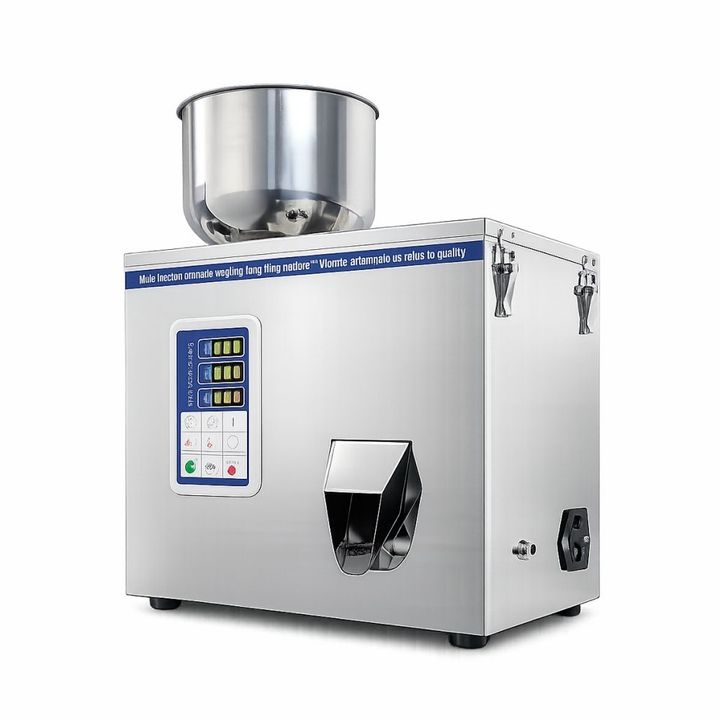
Granule filling equipment is designed to measure and dispense granular products into containers, pouches, bags, bottles, jars, and other packaging formats.
These systems are widely used for food products, agricultural materials, chemicals, pharmaceuticals, nutraceuticals, and other dry products that consist of individual particles or granules.
Unlike liquid and fine-powder filling systems, granules can vary considerably in particle size, density, shape, and flow behavior. Selecting the right filling technology therefore requires an understanding of the material as well as the container, target quantity, production rate, and required filling accuracy.
Why Granule Filling Equipment Matters
Consistent dosing is important when packaging products sold or processed according to a defined quantity. Automated equipment can reduce variation between containers while coordinating product feeding, weighing or volumetric measurement, filling, and downstream packaging.
Modern granule filling equipment can support:
- Controlled product quantities
- Repeatable filling cycles
- High production throughput
- Automated container positioning
- Reduced manual handling
- Integration with sealing and labeling equipment
- Weight verification
- Programmable filling parameters
The best configuration depends on whether the product is free-flowing, fragile, sticky, irregularly shaped, or prone to segregation.
How Granule Filling Equipment Works
Although different machines use different dosing technologies, a typical granule filling process follows several stages.
1. Product Feeding
Granular material is introduced into a hopper or storage bin. The feeding system moves the product toward the dosing mechanism.
Gravity, vibratory feeders, conveyors, or other controlled feeding methods may be used depending on the product characteristics.
2. Product Flow Control
Granules must move consistently toward the measuring system. Agitation or controlled feeding can help prevent bridging, uneven flow, or interruptions.
Product characteristics such as particle size distribution, moisture, density, and shape can influence flow behavior.
3. Dosing or Weighing
The machine measures the target quantity using a selected filling method.
Common approaches include:
- Volumetric cup filling
- Gravimetric filling
- Multihead weighing
- Auger-assisted dosing
- Linear weighing
The choice depends on the product and the required quantity accuracy.
4. Container Positioning
Empty containers are transferred into the filling area using conveyors or automated handling equipment.
Sensors can detect container presence and coordinate the filling cycle. Proper positioning helps reduce product spillage and improves production consistency.
5. Product Filling
Once the required quantity is measured, the granules are released into the container.
The discharge mechanism and filling speed can be adjusted to reduce excessive impact, dust, or product damage.
6. Weight or Fill Verification
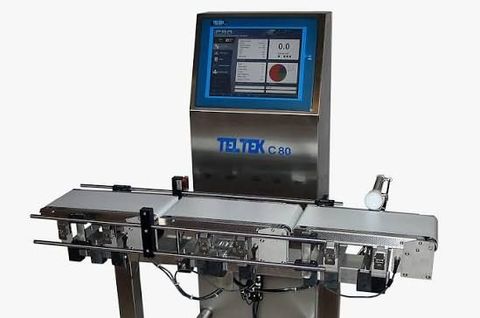
Automated weighing or inspection equipment may verify the filled container.
Containers outside the defined tolerance range can be identified for further inspection or removal.
7. Sealing and Downstream Packaging
After filling, containers can move to capping, heat sealing, lidding, bag closing, labeling, coding, or secondary packaging equipment.
The filling machine can operate as a standalone unit or as part of a complete automated packaging line.
Types of Granule Filling Equipment
Volumetric Cup Fillers
Volumetric cup fillers use calibrated cups to measure a defined volume of granular material.
They can be suitable for relatively free-flowing products with consistent bulk density.
Common applications include:
- Rice
- Grains
- Seeds
- Pulses
- Small snacks
- Dry food ingredients
Because the measurement is volume-based, changes in bulk density can affect the actual product weight.
Gravimetric Filling Machines
Gravimetric systems measure granular products by weight.
The product is discharged into a weighing mechanism until the target quantity is reached. This approach can be useful when the packaged quantity is specified by mass.
Gravimetric systems can accommodate a broad range of granular products and can be integrated with automatic checkweighing and packaging equipment.
Multihead Weighing Systems
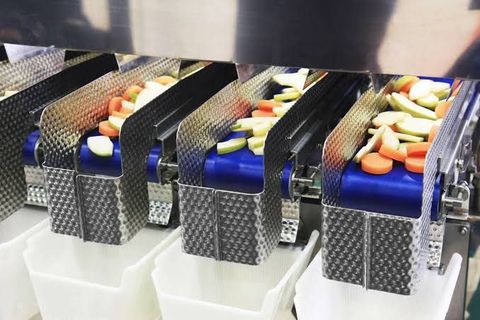
Multihead weighers use multiple weighing heads to create combinations that reach a target weight.
This technology is often used for products such as:
- Snacks
- Confectionery
- Frozen foods
- Nuts
- Seeds
- Vegetables
- Granular food products
Multiple weighing heads can provide rapid and controlled portioning for suitable products.
Linear Weighing Systems
Linear weighers use individual weighing channels or hoppers to measure product quantities.
They can be considered for applications where product characteristics and production requirements do not require a multihead configuration.
Auger-Assisted Systems
Auger-based dosing is more commonly associated with powders, but certain granular or mixed dry products can also use screw-based feeding or dosing.
The screw rotation controls product movement toward the discharge point. The suitability depends heavily on particle size and product behavior.
Granule Filling Equipment Comparison
| Equipment Type | Measurement Method | Typical Applications |
|---|---|---|
| Volumetric cup filler | Volume | Rice, grains, seeds |
| Gravimetric filler | Weight | Food and industrial granules |
| Multihead weigher | Combined weight | Snacks, nuts, confectionery |
| Linear weigher | Weight | Granular food products |
| Auger-assisted system | Screw-based dosing | Selected dry granular products |
Factors to Consider When Selecting Equipment
Choosing granule filling equipment requires evaluation of the product, container, and production environment.
Particle Size and Shape
Large, small, round, irregular, or fragile particles can behave differently during feeding and discharge.
Equipment should accommodate the product without creating excessive breakage or inconsistent flow.
Bulk Density
Bulk density affects the relationship between volume and weight. Products with significant density variation may benefit from weight-based measurement.
Flowability
Free-flowing granules can move easily through hoppers and chutes, while cohesive or irregular materials may require additional feeding controls.
Product Fragility
Some granules can break when subjected to excessive mechanical force or impact. Gentle product handling may therefore be important.
Target Quantity
The required fill quantity influences the size and configuration of the weighing or dosing system.
Small portions and large packages may require different machine configurations.
Container Format
The container opening, dimensions, material, and shape influence the filling mechanism and nozzle or discharge configuration.
Common packaging formats include:
- Bottles
- Jars
- Bags
- Pouches
- Boxes
- Cans
- Sacks
Applications of Granule Filling Equipment
Granule filling systems are used across multiple industries.
| Industry | Granular Products |
|---|---|
| Food processing | Rice, grains, cereals, nuts |
| Agriculture | Seeds and selected granular products |
| Pharmaceuticals | Granulated formulations |
| Nutraceuticals | Granular supplements |
| Chemicals | Granular compounds |
| Animal nutrition | Feed granules |
| Household products | Selected granular formulations |
Automation and 2026 Trends
Modern granule filling equipment can incorporate programmable controls, digital weighing systems, sensors, automated conveyors, and inspection technology.
Depending on the configuration, automated systems can monitor filling parameters, coordinate multiple packaging stages, and record production information.
Multihead weighing technology is particularly useful for applications requiring rapid combination weighing. Integrated checkweighing can also provide an additional layer of quantity verification.
However, automation requirements should be matched to production volume, product characteristics, packaging format, and operational complexity.
Best Practices for Granule Filling
Consistent filling performance depends on stable product flow and properly maintained equipment.
Important practices include:
- Maintain consistent product feeding.
- Monitor changes in bulk density.
- Check weighing accuracy regularly.
- Inspect hoppers, chutes, feeders, and weighing components.
- Prevent excessive product buildup.
- Adjust filling parameters when changing products.
- Use suitable handling methods for fragile granules.
- Keep product-contact areas clean.
- Verify container positioning.
- Monitor conveyor and filling synchronization.
Regular inspection can help identify mechanical wear and changes in filling performance before they affect larger production batches.
Frequently Asked Questions
What is granule filling equipment?
Granule filling equipment is machinery designed to measure and dispense granular products into containers or packaging at controlled quantities and production rates.
What products can granule filling machines handle?
They can handle products such as grains, rice, seeds, nuts, cereals, snacks, confectionery, feed granules, pharmaceutical granules, and selected chemical materials.
What is the difference between volumetric and gravimetric granule filling?
Volumetric systems measure product according to volume, while gravimetric systems measure product according to weight. Weight-based systems can be useful when bulk density varies.
Which filling system is suitable for fast production?
Multihead weighing systems can support high-speed portioning for suitable free-flowing granular products. The appropriate configuration depends on product characteristics and production requirements.
How do I choose granule filling equipment?
Consider particle size, shape, flowability, bulk density, product fragility, target quantity, container format, production rate, filling accuracy, sanitation requirements, and integration with other packaging equipment.
Conclusion
Granule filling equipment provides controlled methods for measuring and packaging products made up of individual particles or granules. Volumetric cup fillers, gravimetric systems, multihead weighers, linear weighers, and selected auger-assisted systems can address different product and production requirements.
The right equipment depends on particle characteristics, bulk density, flow behavior, target quantity, container design, production capacity, and required accuracy. Evaluating these factors together helps manufacturers develop a filling system that supports consistent and reliable packaging operations.