7 Types of Industrial Shrink Wrapping Systems Explained
Industrial shrink wrapping systems are automated or semi-automated packaging systems that use heat-shrinkable film to bundle, protect, and stabilize products.
They are widely used for packaging products in manufacturing, food and beverage, consumer goods, printing, logistics, and industrial environments.
A typical system combines film handling, product positioning, sealing, heat shrinking, cooling, and product transfer. The exact configuration depends on product dimensions, packaging format, film type, production volume, and required level of automation.
Understanding the different industrial shrink wrapping systems helps manufacturers identify the appropriate equipment for their packaging process.
Why Industrial Shrink Wrapping Systems Matter
Shrink wrapping creates a close-fitting film layer around a product or group of products. When heated, the film contracts around the package, helping hold products together and providing a protective outer layer.
Industrial systems are designed to provide consistent packaging across repeated production cycles. Automated controls can regulate film movement, sealing temperature, tunnel temperature, conveyor speed, and other process parameters.
Common considerations include:
- Product dimensions and weight
- Packaging configuration
- Film material
- Film thickness
- Required production rate
- Sealing method
- Heat tunnel requirements
- Conveyor configuration
- Automation level
- Product handling requirements
7 Types of Industrial Shrink Wrapping Systems
1. L-Bar Shrink Wrapping Systems
L-bar shrink wrapping systems use an L-shaped sealing bar to cut and seal shrink film around a product. The product is generally positioned inside folded film before the sealing operation.
After sealing, the wrapped product moves into a heat tunnel where the film contracts around its surface.
These systems are commonly used for:
- Cartons
- Printed materials
- Consumer products
- Small industrial components
- Boxed products
L-bar systems can accommodate a wide range of package sizes and are available in semi-automatic and automated configurations.
2. Side-Seal Shrink Wrapping Systems
Side-seal systems use a continuous sealing mechanism positioned along the side of the product. The film is continuously fed around the product before sealing and shrinking.
This design is particularly useful for continuous production environments where products move through the packaging line at a consistent rate.
Side-seal systems can be integrated with:
- Automatic conveyors
- Product feeders
- Film unwinders
- Heat tunnels
- Automatic film splicing systems
- Downstream handling equipment
3. Sleeve Shrink Wrapping Systems
Sleeve shrink wrapping systems create a sleeve of shrink film around the product or product group. The film is then heated so that it conforms closely to the package.
Sleeve systems are often used when products need to be grouped together or when the packaging format requires an open-end sleeve.
Applications can include:
- Beverage multipacks
- Bundled containers
- Household products
- Industrial components
- Promotional packaging groups
The film sleeve can provide product grouping while allowing different package configurations.
4. Shrink Bundling Systems
Shrink bundling systems are designed to group multiple individual products into a single package.
Products are arranged in a predetermined pattern before shrink film is applied. The film is then heated to form a tight bundle around the group.
This configuration is commonly used for products such as bottles, cans, cartons, and other standardized packages.
A typical process includes:
- Product accumulation
- Product grouping
- Film application
- Film sealing
- Heat shrinking
- Cooling and stabilization
5. Automatic Shrink Wrapping Systems
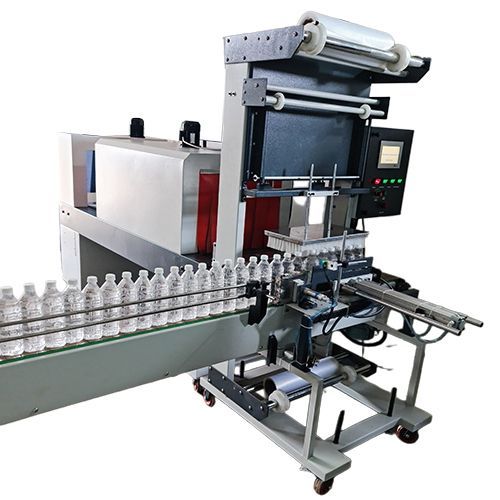
Automatic shrink wrapping systems coordinate multiple packaging stages with limited manual intervention. Product feeding, film application, sealing, shrinking, and discharge can be integrated into one production line.
Sensors and programmable controls can regulate product positioning and machine timing.
These systems are commonly considered for continuous packaging environments where consistent processing and synchronized product movement are important.
6. Shrink Tunnel Systems
Shrink tunnel systems use controlled heat to shrink film around products after the film has been applied and sealed.
The tunnel typically contains heating elements, airflow systems, temperature controls, and a conveyor.
The main stages include:
- Product entry
- Controlled heating
- Film contraction
- Heat distribution
- Product exit
- Cooling and stabilization
Shrink tunnels can be configured for different film types, package dimensions, conveyor speeds, and temperature requirements.
7. Industrial Shrink Bundling and Pallet Wrapping Systems
Large-scale shrink packaging systems can be configured for grouped products, large loads, and palletized goods. These systems use heavier-duty film handling and larger heating or wrapping equipment than systems designed for individual packages.
Depending on the configuration, the system may automatically position products, apply film, seal the package, and transfer the completed load.
Applications can include:
- Industrial cartons
- Building materials
- Large consumer product groups
- Palletized goods
- Warehouse and distribution packages
How Industrial Shrink Wrapping Systems Work
Although machine designs vary, the general process follows several stages.
1. Product Positioning
Products are placed individually or grouped according to the required packaging format. Automated conveyors and product guides can maintain consistent spacing.
2. Film Feeding
A film roll supplies the shrink film to the packaging system. Film tension and feeding speed are controlled to maintain consistent coverage.
Common film materials include polyethylene, polyolefin, and PVC, although material selection depends on the application and packaging requirements.
3. Film Application
The film is positioned around the product or product group. Depending on the machine, this can involve a sleeve, folded film, or continuous film arrangement.
4. Sealing and Cutting
The film is sealed around the product. Sealing systems can use heated bars, continuous sealing wheels, or other mechanisms.
The sealing temperature and dwell time need to match the selected film.
5. Heat Shrinking
The wrapped product enters a shrink tunnel or heating chamber. Controlled heat causes the film to contract around the package.
Air circulation helps distribute heat throughout the tunnel.
6. Cooling and Stabilization
After heating, the package may pass through a cooling section. Cooling helps stabilize the film and prepare the package for downstream handling.
Comparison of Industrial Shrink Wrapping Systems
| System Type | Main Characteristic | Typical Application |
|---|---|---|
| L-Bar system | L-shaped sealing | Individual boxed products |
| Side-seal system | Continuous side sealing | High-volume packaging |
| Sleeve system | Film sleeve formation | Product grouping |
| Shrink bundling system | Groups multiple products | Multipacks |
| Automatic system | Integrated packaging stages | Continuous production |
| Shrink tunnel | Controlled film shrinking | Final shrink stage |
| Large-load system | Heavy-duty packaging | Pallets and industrial loads |
Key Components
A complete industrial shrink wrapping system can contain several components:
- Film unwind system
- Film tension controls
- Product conveyors
- Product guides
- Sealing mechanism
- Film-cutting system
- Heat tunnel
- Heating elements
- Air circulation system
- Temperature controls
- Cooling section
- Sensors
- Programmable control system
The exact configuration depends on the packaging format and production requirements.
How to Select an Industrial Shrink Wrapping System
Product Characteristics
Consider product size, shape, weight, surface characteristics, and grouping requirements.
Film Type
Select film based on shrink characteristics, thickness, strength, transparency, and application requirements.
Production Rate
The required packaging rate determines conveyor speed, sealing configuration, tunnel capacity, and automation level.
Package Configuration
Determine whether products will be wrapped individually, grouped into multipacks, or packaged as larger loads.
Available Space
Machine footprint, conveyor direction, tunnel dimensions, film storage, and operator access should be considered during production-line planning.
Quality Requirements
Consistent sealing, uniform shrinkage, proper film coverage, and stable package dimensions are important for finished-package quality.
Applications of Industrial Shrink Wrapping Systems
Industrial shrink wrapping equipment is used across numerous sectors:
- Food and beverage packaging
- Consumer goods packaging
- Pharmaceutical packaging
- Printing and publishing
- Household products
- Electronics packaging
- Industrial components
- Carton and case packaging
- Warehouse and distribution operations
Frequently Asked Questions
What are industrial shrink wrapping systems?
Industrial shrink wrapping systems are packaging machines that apply heat-shrinkable film around products or product groups and use controlled heat to contract the film around the package.
What are the main types of shrink wrapping systems?
Common configurations include L-bar systems, side-seal systems, sleeve systems, shrink bundling systems, automatic systems, shrink tunnels, and large-load packaging systems.
What film is used for industrial shrink wrapping?
Common shrink films include polyethylene, polyolefin, and PVC. The appropriate film depends on the product, packaging format, sealing process, and required film characteristics.
What does a shrink tunnel do?
A shrink tunnel applies controlled heat to the film after it has been positioned and sealed around a product. The heat causes the film to contract and conform to the package.
How do automatic shrink wrapping systems work?
Automatic systems coordinate product feeding, film application, sealing, heat shrinking, and product discharge using conveyors, sensors, controls, and integrated packaging equipment.
Conclusion
The 7 types of industrial shrink wrapping systems described above address different packaging formats and production requirements. L-bar, side-seal, sleeve, bundling, automatic, tunnel, and large-load systems each use different configurations to apply and shrink film around products.
Selecting an appropriate system requires consideration of product dimensions, packaging format, film characteristics, production rate, automation requirements, and available production space. Understanding how each system operates provides a practical foundation for planning an efficient shrink packaging process.