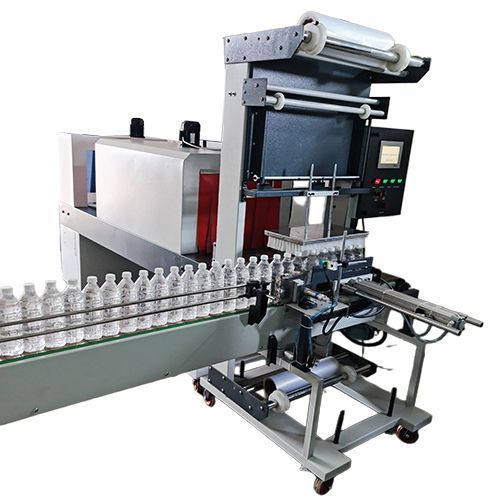
What Is Stretch Wrapping Equipment and How Does It Work?
Stretch wrapping equipment is used to apply stretch film around products, cartons, and palletized loads to hold items together during storage, handling, and transportation.
The equipment controls film tension, wrapping patterns, load rotation, and film application to create a stable package.
Modern stretch wrapping equipment ranges from manually assisted systems to fully automatic pallet wrapping machines. The appropriate configuration depends on load dimensions, weight, production volume, film characteristics, and required level of automation.
Why Stretch Wrapping Equipment Matters
Palletized products can shift or become unstable during handling and movement. Stretch film helps secure individual packages into a unified load while also providing a protective outer layer.
Equipment provides controlled film application compared with inconsistent manual wrapping. Automated systems can regulate film tension, wrapping speed, overlap, and the number of film layers.
Key factors include:
- Load dimensions
- Load weight
- Pallet configuration
- Film width and thickness
- Film stretch characteristics
- Required wrapping speed
- Load stability requirements
- Available floor space
- Automation level
How Stretch Wrapping Equipment Works
The wrapping process generally involves preparing the load, attaching stretch film, rotating or moving the load, controlling film tension, and completing the wrap.
1. Load Preparation
Products are first arranged on a pallet or other stable base. Cartons and individual packages should be positioned so that the load remains within the pallet footprint.
The load height, width, weight distribution, and product arrangement can influence the wrapping pattern and machine settings.
2. Film Loading
Stretch film is installed onto the machine's film carriage or dispensing system.
Depending on the equipment, the film may be pre-stretched mechanically before reaching the load. Pre-stretch systems can elongate the film between rollers while maintaining controlled tension.
3. Film Attachment
The film is attached to the pallet or load at the beginning of the wrapping cycle.
Some systems use automatic film attachment mechanisms, while simpler equipment may require an operator to secure the film manually.
4. Load Rotation or Film Carriage Movement
There are two common approaches to wrapping.
In turntable systems, the pallet rotates while the film carriage moves vertically.
In rotary-arm systems, the load remains stationary while an arm carrying the film rotates around it.
This allows the machine to apply film around the complete perimeter of the load.
5. Film Tension Control
The film is stretched as it is applied around the load. Controlled tension helps maintain contact between the film and the packaged products.
Different machines use mechanical brakes, powered rollers, or pre-stretch systems to control film tension.
Too little tension may result in an unstable load, while excessive tension can deform certain products or packaging.
6. Wrapping Pattern
The machine applies film according to a programmed wrapping pattern.
Typical settings can control:
- Number of bottom wraps
- Number of top wraps
- Vertical travel speed
- Film overlap
- Film tension
- Pre-stretch ratio
- Wrapping speed
The selected pattern depends on load height, product arrangement, and stability requirements.
7. Film Cutting and Securing
At the end of the cycle, the film is cut and secured to the load.
Automatic machines can perform cutting and film attachment without requiring manual intervention. Some systems also apply heat or mechanical pressure to secure the film end.
Types of Stretch Wrapping Equipment
Turntable Stretch Wrappers
Turntable machines rotate the pallet on a platform while a film carriage moves vertically.
They are commonly used for standard palletized loads and are suitable for many warehouse and production environments.
Rotary Arm Stretch Wrappers
Rotary arm systems rotate the film carriage around a stationary load.
This configuration can be useful for unstable, lightweight, or tall loads that could move excessively if placed on a rotating platform.
Rotary Ring Stretch Wrappers
Rotary ring systems use a rotating ring or hoop to carry the film around the load.
They are designed for continuous wrapping operations and can accommodate high-speed production lines.
Automatic Stretch Wrapping Systems
Automatic systems can integrate pallet conveying, wrapping, film cutting, and load discharge.
These systems are often incorporated into larger packaging lines where pallets move continuously between production and distribution stages.
Mobile Stretch Wrapping Machines
Mobile systems can move around stationary loads rather than requiring pallets to be transported onto a dedicated turntable.
They can be useful for large or irregular loads that are difficult to position on fixed wrapping equipment.
Main Components of Stretch Wrapping Equipment
A typical machine may contain the following components:
| Component | Function |
|---|---|
| Film carriage | Holds and dispenses stretch film |
| Pre-stretch rollers | Stretch film before application |
| Turntable | Rotates the pallet |
| Rotary arm | Moves film around stationary loads |
| Mast | Guides vertical film movement |
| Tension control | Regulates film force |
| Drive system | Controls machine movement |
| Sensors | Detect load height and position |
| Control panel | Sets wrapping parameters |
| Film cutter | Cuts film at cycle completion |
Stretch Film and Equipment Compatibility
Stretch wrapping performance depends partly on the relationship between the machine and the film.
Common stretch film characteristics include:
- Film thickness
- Stretch percentage
- Tensile strength
- Puncture resistance
- Cling characteristics
- Pre-stretch capability
Machine settings should correspond with the selected film. For example, a pre-stretch machine requires film that can tolerate the required elongation without excessive tearing or loss of holding force.
Factors for Selecting Stretch Wrapping Equipment
Load Characteristics
Evaluate pallet dimensions, load height, weight, shape, and stability.
Production Volume
Higher production rates may require automatic systems with powered conveyors, automated film cutting, and integrated load handling.
Wrapping Method
Turntable, rotary arm, rotary ring, and mobile systems each have different operating characteristics.
Film Requirements
Film width, thickness, stretch capability, and pre-stretch requirements should be compatible with the selected equipment.
Automation
Consider whether the process requires manual loading, automatic pallet detection, automated film attachment, automatic cutting, and conveyor integration.
Available Space
Machine dimensions, conveyor arrangement, operator access, and pallet movement should be considered during installation planning.
Applications of Stretch Wrapping Equipment
Stretch wrapping systems are used across many industries:
- Food and beverage distribution
- Consumer goods
- Pharmaceutical logistics
- Industrial manufacturing
- Automotive components
- Warehouse operations
- E-commerce fulfillment
- Building materials
- Agricultural products
Frequently Asked Questions
What is stretch wrapping equipment?
Stretch wrapping equipment consists of machines designed to apply stretch film around products or palletized loads to stabilize and secure them during handling, storage, and transportation.
How does a stretch wrapping machine work?
The machine dispenses stretch film around a load while controlling film tension and wrapping movement. Depending on the design, either the load rotates or the film carriage moves around the stationary load.
What is pre-stretch in a wrapping machine?
Pre-stretch is the controlled elongation of stretch film before it is applied to the load. Specialized rollers can stretch the film to a predetermined ratio.
What is the difference between a turntable and rotary arm wrapper?
A turntable wrapper rotates the pallet while the film carriage moves around it vertically. A rotary arm wrapper keeps the pallet stationary while an arm carrying the film rotates around the load.
How do I choose stretch wrapping equipment?
Selection depends on load dimensions, weight, stability, production volume, film characteristics, wrapping method, automation requirements, and available installation space.
Conclusion
Stretch wrapping equipment combines film handling, tension control, load movement, and automated wrapping patterns to stabilize palletized products. Different machine configurations are available for standard, unstable, large, or high-volume loads.
Understanding how turntable, rotary arm, rotary ring, automatic, and mobile systems work can help manufacturers and logistics operations identify the appropriate wrapping approach. The final equipment configuration should match the load characteristics, film specifications, production requirements, and desired automation level.