HVOF Coating Systems Overview: Critical Details to Review Before It’s Too Late
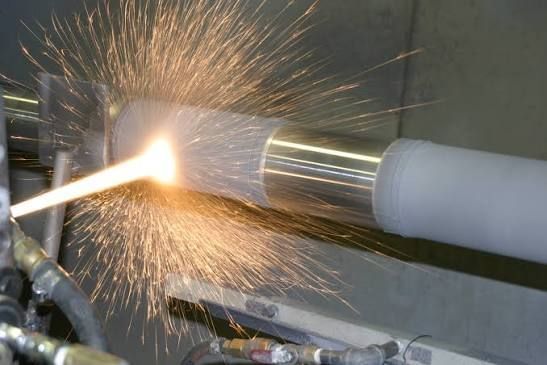
An industrial HVOF coating system uses the High Velocity Oxy-Fuel thermal spray process to place a protective material onto the surface of a component.
HVOF coating equipment combines fuel, oxygen, a spray gun, powder feed equipment, controls, and supporting components to produce a high-speed stream that accelerates coating particles toward a prepared surface.
The process exists because many industrial components experience abrasion, erosion, corrosion, friction, or repeated mechanical contact. Instead of changing an entire component when its surface performance becomes inadequate, engineers can apply a specialized coating to provide different surface characteristics while retaining the underlying material.
An HVOF coating system generally operates at high particle velocities. Coating powder is introduced into the spray stream, heated to an appropriate condition, and propelled toward the component. The particles flatten and form successive layers that create the final coating.
Where HVOF Technology Is Used
HVOF thermal spray equipment is found across industries where surface durability and dimensional control are important. Common applications include hydraulic components, valves, oil and gas equipment, aerospace components, pumps, shafts, rolls, and industrial tooling.
Different coating materials are selected according to the operating environment. Carbide-based materials, particularly tungsten carbide formulations, are frequently associated with applications involving abrasive wear and repeated mechanical contact.
An HVOF coating machine may be configured for manual operation, automated movement, or integration with a robotic system. The appropriate arrangement depends on component geometry, production volume, coating specifications, and process control requirements.
Main Components of an HVOF System
A complete HVOF thermal spray system normally contains several interconnected elements. Each contributes to the stability and repeatability of the coating process.
| System component | Main purpose |
|---|---|
| Spray gun | Generates the high-velocity spray stream |
| Fuel and oxygen supply | Provides combustion energy |
| Powder feeder | Delivers coating material at a controlled rate |
| Control unit | Regulates process parameters |
| Manipulator or robot | Controls gun or component movement |
| Cooling arrangement | Controls component temperature |
| Abrasive preparation equipment | Prepares the surface before spraying |
| Exhaust and filtration | Manages process emissions and particles |
| Inspection equipment | Evaluates coating characteristics |
An HVOF equipment manufacturer may combine these components into an integrated production arrangement. Larger installations can include automated material handling, programmable movement, monitoring systems, and enclosure equipment.
Why HVOF Coating Systems Matter
Surface Protection in Industrial Equipment
Industrial components can deteriorate when their surfaces repeatedly encounter particles, fluids, pressure, heat, or mechanical movement. HVOF coatings can modify surface characteristics without requiring the entire component to be manufactured from a different bulk material.
A tungsten carbide HVOF coating system, for example, can be used where resistance to abrasive wear is an important design requirement. Other powder compositions may be selected when corrosion resistance, friction behavior, or particular temperature characteristics are more relevant.
Relevance to Different Industries
HVOF technology is used in several demanding sectors because surface degradation can affect equipment performance and maintenance intervals. Applications differ significantly between industries.
- Aerospace: HVOF coating systems for aerospace applications can be used on selected aircraft and engine-related components where approved coating specifications apply.
- Oil and gas: HVOF oil and gas coating systems may be used for components exposed to abrasive or corrosive environments.
- Hydraulics: An HVOF hydraulic coating system can be applied to selected rods and other components where surface wear is a concern.
- Valves: HVOF valve coating equipment can support protective coatings on specific valve surfaces.
- General manufacturing: Industrial HVOF equipment can be incorporated into production processes involving shafts, rolls, tooling, and wear components.
Factors That Affect Coating Results
The presence of sophisticated equipment alone does not determine coating quality. Several process variables influence the final result.
Important factors include:
- Substrate material and condition
- Surface preparation method
- Powder composition and particle characteristics
- Fuel and oxygen parameters
- Powder feed rate
- Spray distance
- Gun movement speed
- Component temperature
- Coating thickness
- Surface finishing method
- Inspection procedures
These variables need to be considered together because changing one parameter can influence several other parts of the process.
Reviewing HVOF Equipment Before Installation
Manual, Automated, and Robotic Configurations
An HVOF coating machine can range from a manually operated arrangement to a fully integrated automated system. An automated HVOF coating system can use programmed movement to maintain consistent spray paths across suitable component geometries.
A robotic HVOF coating system adds programmable motion and can coordinate gun movement with component rotation or positioning. This arrangement can be useful for components requiring repeatable coating paths across multiple production cycles.
Powder and Coating Compatibility
HVOF powder coating equipment must be compatible with the powder materials specified for the application. Tungsten carbide HVOF equipment, for instance, needs process conditions appropriate for the selected carbide-based powder.
The coating material should also be evaluated against the substrate and operating environment. A coating intended for abrasive wear may not have the same characteristics as one intended primarily for corrosion or friction control.
Production and Process Controls
An HVOF coating production system may include digital controls for fuel ratios, powder feed, spray movement, temperature, and other process variables. Recording these parameters can help production teams identify variations between coating runs.
For larger installations, HVOF coating automation systems can connect process controls with robotic movement and component positioning. The level of automation should reflect the geometry and repeatability requirements of the application.
Recent Developments in HVOF Technology
Greater Process Automation
From 2024 through 2026, the general direction of thermal spray technology has continued toward increased automation and process monitoring. Manufacturers and industrial users have shown growing interest in systems that combine programmable movement, digital controls, and process data collection.
This trend is particularly relevant to robotic HVOF coating systems. Automated movement can reduce variation caused by inconsistent gun positioning and can make process records easier to maintain.
More Attention to Process Monitoring
Modern HVOF thermal spray machines increasingly incorporate electronic monitoring and control features. These systems can track selected operating parameters and help operators identify deviations during production.
Monitoring does not eliminate the need for inspection. Instead, it provides additional process information that can be considered alongside coating thickness, adhesion, surface condition, and other measured characteristics.
Development of Hard-Surface Alternatives
HVOF technology continues to receive attention in applications where manufacturers are evaluating alternatives to traditional surface-treatment approaches. HVOF carbide coating equipment is particularly relevant where carbide-based coatings can meet the technical requirements of a component.
An HVOF hard chrome replacement system does not mean that every application can use HVOF instead of hard chrome. Material compatibility, regulatory requirements, coating properties, component geometry, and qualification requirements must all be considered.
Laws, Policies, and Compliance Considerations
Environmental and Workplace Requirements
HVOF coating operations involve combustion gases, heated materials, airborne particles, noise, and industrial exhaust. Facilities therefore need to consider applicable workplace safety, ventilation, emissions-control, and environmental requirements.
The exact requirements depend on the country, state or region, facility type, fuels used, coating materials, and operating conditions. Industrial installations may require appropriate ventilation, filtration, monitoring, protective equipment, and documented operating procedures.
Aerospace and Other Regulated Applications
Aerospace applications can involve additional qualification and documentation requirements. An aerospace HVOF coating equipment installation may need to operate under specific material, process, inspection, and quality-control specifications established by the applicable organization or regulatory framework.
Similar considerations can apply to components used in energy, transportation, pressure-containing equipment, and other regulated industries. The applicable requirements should be identified before defining the coating process.
Documentation and Process Control
A documented coating process can help organizations maintain consistency and demonstrate that defined procedures were followed. Records may include powder information, substrate preparation, equipment parameters, coating thickness, inspection results, and operator information.
A turnkey HVOF coating system may integrate several of these functions, but documentation and compliance remain dependent on the facility's procedures and applicable regulations.
Tools and Resources for HVOF Coating Work
Process Planning Tools
Engineers and production teams can use coating specification sheets, process parameter logs, powder technical documentation, equipment manuals, and inspection templates when planning an HVOF application.
Useful resources include:
- Thermal spray process standards
- Powder material datasheets
- Coating specification documents
- Equipment operating manuals
- Surface preparation procedures
- Coating inspection checklists
- Thickness measurement records
- Quality-control templates
- Workplace safety documentation
- Environmental compliance guidance
Inspection and Measurement Equipment
Inspection plays an important role after coating application. Depending on the specification, facilities may evaluate coating thickness, surface roughness, adhesion, porosity, hardness, and visual condition.
The appropriate inspection method depends on the coating material, substrate, component geometry, and required specification. Measurements should be performed using equipment appropriate for the characteristic being evaluated.
Selecting System Configuration
When comparing an HVOF spray system manufacturer or HVOF coating system manufacturer, technical specifications should be reviewed rather than relying only on general equipment descriptions.
Important areas for comparison include:
- Supported fuel configurations
- Powder feeder capabilities
- Spray gun specifications
- Automation compatibility
- Robot integration
- Control and monitoring functions
- Cooling arrangements
- Exhaust requirements
- Component size limitations
- Maintenance requirements
- Available process documentation
Frequently Asked Questions
What is an HVOF coating system?
An HVOF coating system is thermal spray equipment that uses a high-velocity oxy-fuel process to apply protective coating materials to component surfaces. It typically includes a spray gun, fuel and oxygen supplies, powder feeder, controls, and supporting equipment.
What is HVOF coating equipment used for?
HVOF coating equipment is used for applying coatings intended to address surface requirements such as wear resistance, erosion resistance, corrosion protection, or friction control. Applications can include hydraulic components, valves, shafts, aerospace components, and oil and gas equipment.
How does a robotic HVOF coating system work?
A robotic HVOF coating system combines an HVOF spray system with programmable robotic movement. The robot controls the position and movement of the spray gun or component according to a defined coating path.
What is tungsten carbide HVOF equipment used for?
Tungsten carbide HVOF equipment is commonly associated with applications requiring carbide-based protective coatings. These coatings are used on selected components where resistance to abrasive or mechanical wear is an important requirement.
What should be reviewed before selecting an HVOF coating machine manufacturer?
Key considerations include equipment configuration, powder compatibility, fuel arrangement, automation capabilities, component dimensions, process monitoring, safety provisions, documentation, and applicable coating specifications. The selected configuration should correspond to the actual technical and regulatory requirements of the application.
Conclusion
HVOF coating systems use high-velocity thermal spraying to apply protective materials to selected industrial component surfaces. The technology is used across applications involving wear, erosion, corrosion, friction, and other surface-related challenges. Current developments are increasingly focused on automation, robotic movement, digital monitoring, and controlled production processes. Proper equipment configuration, coating compatibility, surface preparation, inspection, workplace controls, and applicable regulations all influence how an HVOF system is implemented.