Gear Grinding Systems: Insights You Need Before Choosing Equipment
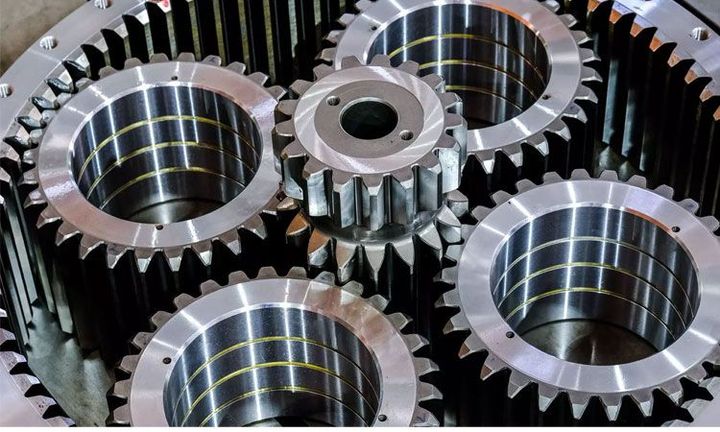
Gear grinding is a precision finishing process used to improve the tooth surfaces of gears after earlier manufacturing steps such as hobbing, shaping, or milling.
A grinding wheel removes a small amount of material from the gear teeth to improve dimensional accuracy, surface quality, tooth geometry, and operating consistency. Modern systems increasingly combine computer numerical control, automation, inspection, and process monitoring.
An industrial CNC gear grinding machine can handle repeated grinding operations with programmed movements and controlled parameters. A CNC gear grinding machine may be configured for different gear sizes, tooth profiles, materials, and production requirements. These systems are found in automotive, aerospace, industrial machinery, robotics, energy equipment, and other applications where accurate gear transmission is important.
A CNC gear grinding system normally includes the grinding machine, spindle, workholding arrangement, CNC controls, dressing equipment, coolant management, measurement functions, and safety systems. More advanced configurations can connect these elements with loading equipment and inspection stations.
How gear grinding developed
Traditional gear finishing relied heavily on manual adjustments and mechanical controls. As gear applications became more precise, manufacturers introduced CNC controls, improved grinding wheels, computer-based compensation, and automated measurement.
Modern gear grinding equipment can therefore perform repeatable movements while maintaining defined grinding parameters. A precision gear grinding machine can also incorporate inspection data into the production process, helping operators identify dimensional changes during operation.
Main grinding approaches
Several grinding methods are used depending on the gear geometry and production requirements.
- Generating grinding works through continuous relative movement between the grinding tool and gear.
- Profile grinding follows the specific tooth profile programmed or defined for the component.
- Internal grinding processes the teeth of gears with an internal tooth arrangement.
- External grinding processes gears with teeth located around the outside diameter.
These approaches have resulted in specialized equipment such as a CNC internal gear grinding machine, CNC external gear grinding machine, and CNC gear profile grinding machine.
Importance
Gear accuracy affects how smoothly mechanical systems transfer motion and power. Incorrect tooth geometry, excessive surface roughness, or dimensional variation can contribute to noise, vibration, uneven loading, and accelerated wear.
This makes gear grinding relevant to many industries even though most people do not directly interact with the equipment. Gears produced through these processes can be found inside vehicle transmissions, industrial robots, machine tools, aircraft systems, pumps, compressors, and other mechanical assemblies.
Why precision matters
A high precision gear grinding machine is designed to control small dimensional variations during finishing. This becomes particularly important when gears operate at high rotational speeds or carry significant loads.
Important factors include:
- Tooth profile accuracy
- Tooth spacing consistency
- Gear lead accuracy
- Surface finish
- Runout
- Thermal effects
- Grinding wheel condition
- Workholding accuracy
A precision gear grinding equipment configuration may combine several of these controls into one production environment.
Choosing a system configuration
Equipment selection depends on the physical characteristics of the gears and the required production method. A small precision gear and a large industrial transmission gear can require very different machine configurations.
| Requirement | Relevant equipment characteristic |
|---|---|
| External gear teeth | CNC external gear grinding machine |
| Internal gear teeth | CNC internal gear grinding machine |
| Defined tooth profile | CNC gear profile grinding machine |
| Continuous production | Continuous generating gear grinder |
| Automated loading | Automated CNC gear grinder |
| High-volume production | CNC gear grinding production line |
| Robotic material movement | Robotic gear grinding system |
| Large components | Large gear grinding machine |
| Hard finishing | CBN gear grinding machine |
The type of gear material also matters. Hardened steels, specialty alloys, and other engineering materials may require different grinding wheels, coolant arrangements, dressing strategies, and process parameters.
Industry-specific applications
An automotive gear grinding machine is commonly associated with transmission and drivetrain components where dimensional consistency and controlled surface characteristics are important. EV gear grinding machine configurations are also receiving attention as electric drivetrains introduce different requirements for gear noise, rotational speed, and transmission design.
Aerospace applications can involve complex geometries and strict documentation requirements. An aerospace gear grinding machine may therefore be integrated with detailed inspection and process-recording systems.
Recent Updates
Gear grinding technology continues to develop around automation, digital controls, process monitoring, and integration with inspection systems. Current systems increasingly connect machining equipment with production software, sensors, measurement equipment, and automated material handling.
Greater automation
An automated gear grinding system can coordinate loading, grinding, dressing, measurement, and unloading with limited manual intervention. Automation can help maintain consistent process sequences and reduce unnecessary handling between production stages.
A gear grinding automation system may include:
- Automatic workpiece loading
- Robotic transfer
- Tool and wheel monitoring
- Automatic dressing
- In-process measurement
- Coolant monitoring
- Production data collection
- Automatic compensation
A robotic gear grinding system can connect the grinding machine with other equipment in a manufacturing cell. This arrangement can be useful when components repeatedly move between machining, washing, inspection, and storage operations.
Digital monitoring and data
Modern CNC gear grinding equipment increasingly uses sensors and software to monitor spindle behavior, grinding conditions, temperature, wheel condition, and machine status. Production data can also be recorded for quality analysis and process control.
This development is particularly relevant for an automated CNC gear grinder operating within a connected production environment. Digital monitoring can provide operators with more information about changes occurring during a grinding cycle.
Grinding wheel developments
CBN grinding wheels remain important for hardened gear materials because cubic boron nitride has characteristics suited to precision grinding. A CBN gear grinding machine can be configured around specific wheel types, dressing methods, and process parameters.
Grinding wheel selection depends on factors such as material hardness, tooth geometry, grinding method, required surface characteristics, and production conditions. Wheel specifications should therefore be evaluated together with the machine and process design.
Integrated production lines
A CNC gear grinding production line can connect several stages of manufacturing into a coordinated sequence. Instead of treating grinding as an isolated operation, manufacturers can integrate it with washing, inspection, handling, and data systems.
A turnkey gear grinding system may include multiple coordinated components designed around a defined production workflow. The actual configuration varies according to gear dimensions, production volume, inspection requirements, and factory layout.
Laws or Policies
Gear grinding equipment is affected by workplace safety, machinery, electrical, environmental, and product-quality requirements. The exact rules depend on the country where the equipment is installed and operated.
Because no specific country was identified, the following points describe common regulatory areas rather than country-specific legal requirements.
Machine safety
Industrial grinding equipment normally requires safeguards around rotating components, grinding wheels, moving axes, and automated handling equipment. Emergency stopping arrangements, protective guarding, interlocks, and operator access controls are common safety considerations.
Where robots are integrated into the equipment, additional requirements can apply to robot movement, restricted areas, guarding, and emergency controls.
Electrical and control requirements
CNC systems contain electrical equipment, control cabinets, motors, drives, sensors, and communication components. Applicable electrical and machinery regulations may specify requirements for grounding, protection, control functions, and equipment documentation.
Environmental considerations
Grinding operations can generate metal particles, used grinding materials, heat, noise, and contaminated coolant. Facilities may therefore need procedures for coolant management, waste handling, ventilation, noise control, and environmental compliance.
Specific requirements depend on local environmental legislation and the materials used during production.
Documentation and conformity
Equipment used in regulated manufacturing environments may require technical documentation, risk assessments, operating instructions, maintenance records, and conformity documentation. The required documentation varies by jurisdiction and machine configuration.
Tools and Resources
Several resources can help users understand and evaluate gear grinding technology without requiring advanced engineering knowledge.
Machine specifications
Manufacturer documentation can provide information about:
- Maximum gear diameter
- Internal and external grinding capability
- Module or diametral pitch range
- Helix angle range
- Machine travel
- Grinding spindle characteristics
- Wheel dimensions
- Workpiece weight limits
- CNC control architecture
- Automation compatibility
Comparing these specifications helps determine whether a machine can physically accommodate the intended gear range.
Inspection equipment
Gear measurement systems can evaluate tooth profile, lead, pitch, runout, and other dimensional characteristics. Inspection results can also be used alongside machine data to understand process variation.
Production planning tools
Manufacturing teams may use spreadsheets, production-planning software, machine monitoring platforms, and maintenance-management systems to organize equipment utilization and process records.
For a helical gear grinding machine, planning should also account for helix geometry, workholding, grinding direction, dressing arrangements, and inspection requirements.
Equipment comparison checklist
Before selecting gear grinding equipment, relevant questions include:
- What gear diameters and widths must be processed?
- Are internal, external, or profile grinding operations required?
- What gear materials will be processed?
- Is continuous generating or profile grinding more appropriate?
- What level of automation is required?
- Is robotic handling necessary?
- What inspection method will be used?
- How will grinding wheels be dressed?
- What production data needs to be recorded?
- What safety and environmental requirements apply?
FAQs
What is a CNC gear grinding machine?
A CNC gear grinding machine uses computer-controlled axes and grinding equipment to finish gear teeth accurately. It can control programmed movements for profile, generating, internal, or external grinding operations.
What is a CNC gear grinding system?
A CNC gear grinding system combines the grinding machine with controls, workholding, grinding wheels, dressing equipment, coolant management, and potentially inspection or automated handling equipment.
What is a CBN gear grinding machine used for?
A CBN gear grinding machine uses cubic boron nitride grinding wheels, which are suited to precision grinding of many hardened materials. The appropriate wheel and process depend on the gear material and required geometry.
What is the difference between internal and external gear grinding?
A CNC internal gear grinding machine processes teeth located inside a gear, while a CNC external gear grinding machine processes teeth around the outside of a gear. Their tooling and machine arrangements are consequently different.
What does an automated CNC gear grinder do?
An automated CNC gear grinder combines computer-controlled grinding with automated functions such as workpiece loading, unloading, dressing, measurement, and process monitoring. The exact automation level varies by machine configuration.
Conclusion
Gear grinding is a finishing process that helps produce accurate and consistent gear tooth surfaces for demanding mechanical applications. Modern systems combine CNC control, precision grinding, automated handling, inspection, and digital monitoring. Equipment selection depends on gear geometry, material, dimensions, production requirements, automation needs, and applicable regulations. Understanding these factors provides useful context when comparing industrial gear grinding machine configurations.